

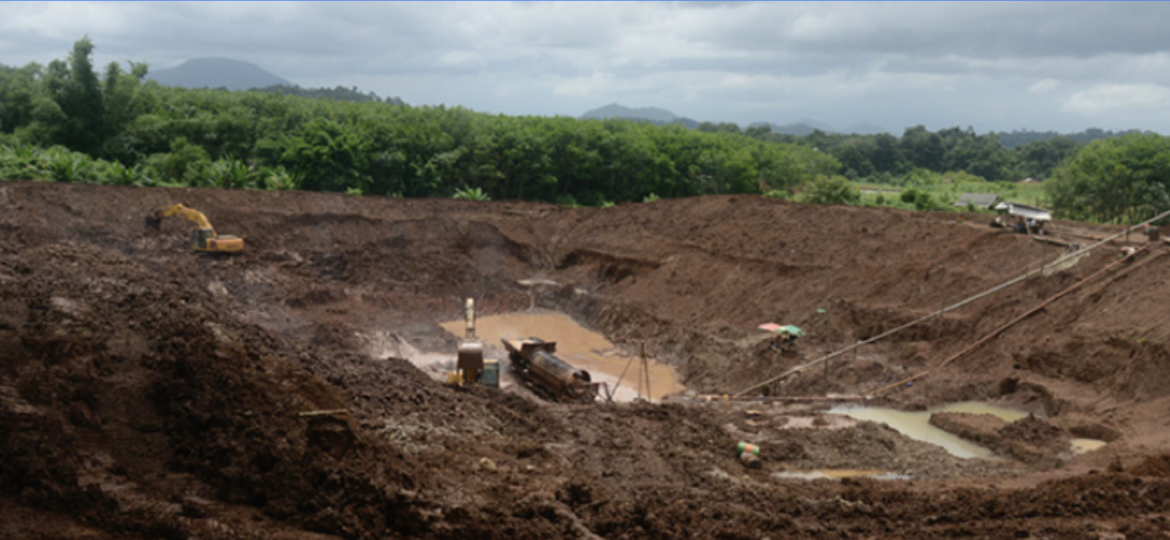
Mechanized gem mining in Sri Lanka typically involves using machinery such as excavators and bulldozers to extract gem-bearing material, especially in larger-scale operations in gemstone-rich areas like Ratnapura — the heart of Sri Lankan sapphire mining. This method is faster and more productive than traditional mining, helping uncover Ceylon sapphire deposits that are located deeper underground…
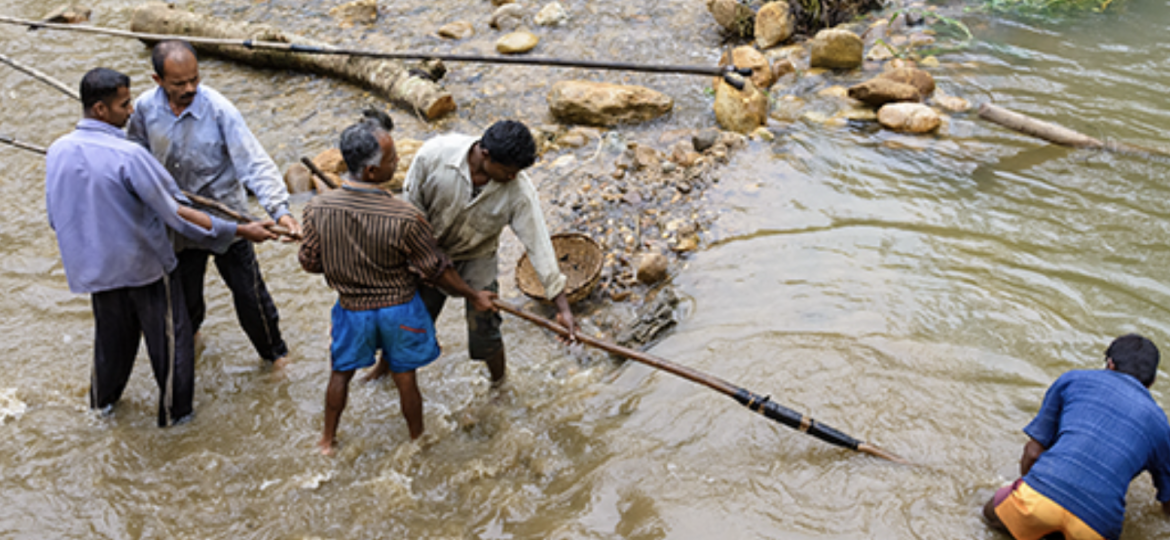
Riverbed dredging is a less common but traditional method of mining Sri Lankan gemstones, requiring the skill and strength of experienced dredgers. Water flow in a stream is temporarily redirected using a barrier, increasing water pressure over a selected point in the riverbed. Teams use long-handled shovels — sometimes over 40 feet in length — to scrape the bottom of the river until the illam (gem-bearing gravel) is exposed…
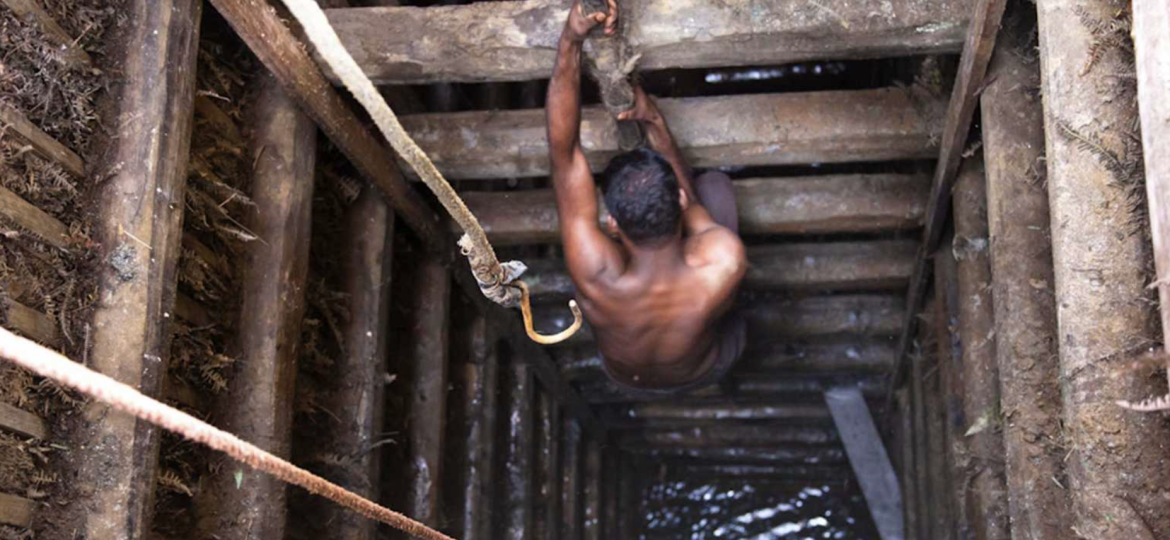
Deep pit mining remains one of the most iconic and labor-intensive methods used in Sri Lankan sapphire extraction. Vertical rectangular pits — often reinforced with timber such as rubber wood, coconut or areca nut — are dug through soil and gravel until gem-bearing layers are reached. Each stage of excavation is carefully sorted to ensure no Ceylon sapphire is missed…
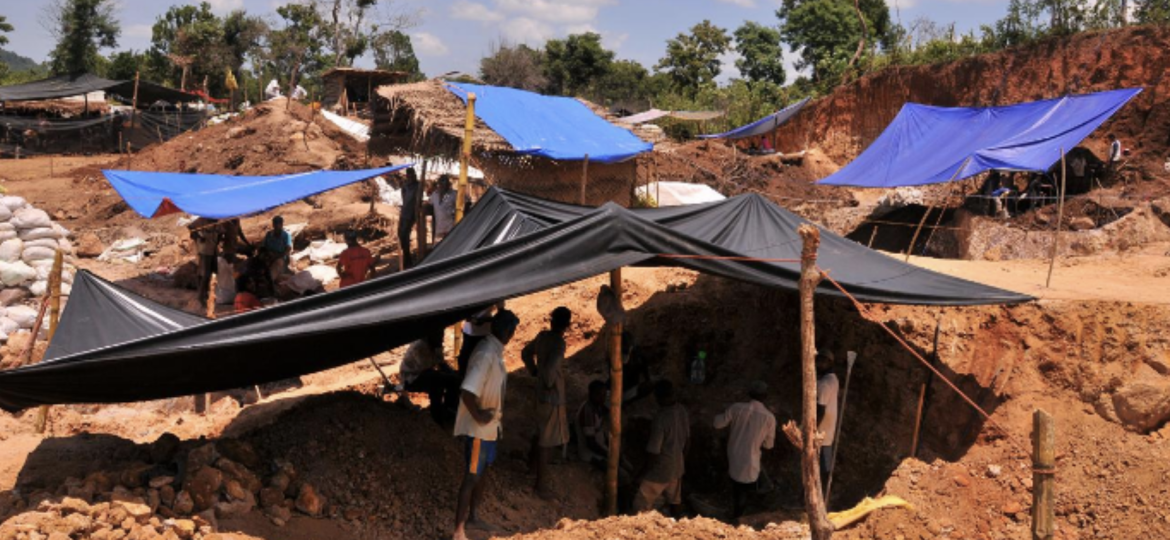
Gem mining in Sri Lanka plays a vital role in uncovering the island’s world-famous gems, including the highly prized Sri Lankan sapphire. Traditionally, miners dig pits down to the gem-bearing gravel layer known as “illam.” Depending on groundwater levels and soil type, different drainage and structural methods are used to keep the pits secure.
Gem mining in Sri Lanka is an ancient craft passed down through generations — an art that blends traditional knowledge with modern techniques. As the homeland of Ceylon sapphire, Sri Lanka has shaped a rich gemological heritage stretching from ancient kingdoms to advanced mining operations today…
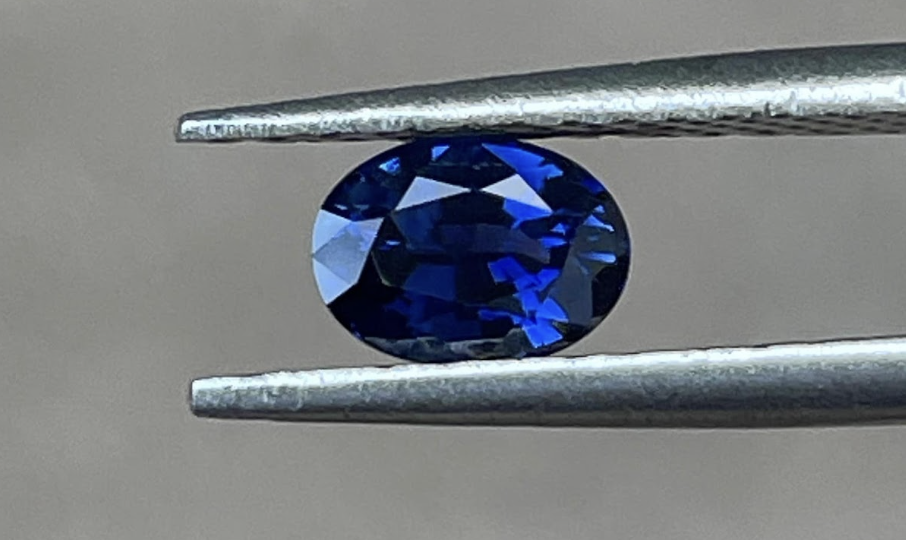
The Ceylon Blue Sapphire — celebrated as the “King of Precious Stones” — is the most iconic gemstone of Sri Lanka. First discovered in the ancient mines of Ratnapura around 500 BC, these gems have adorned royalty for centuries. One of the world’s most famous sapphires — a magnificent 12-carat Royal Blue sapphire Sri Lanka — is proudly featured in the British Crown Jewels and continues to symbolize elegance, nobility, and power…
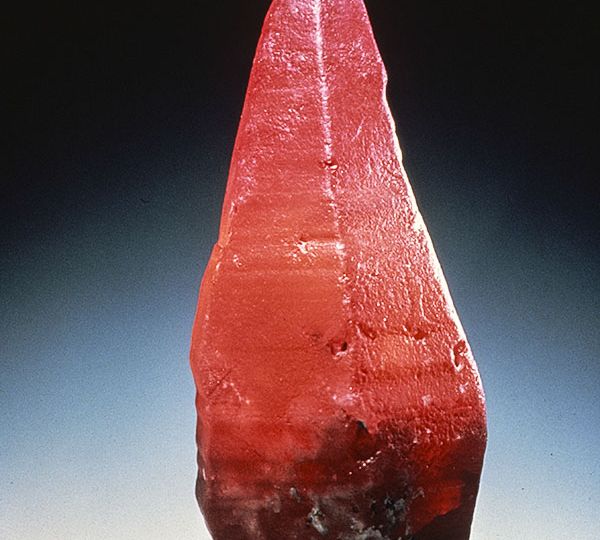
Historically known as the rarest and the most valuable corundums found in Sri Lanka, the Padparadscha sapphire, features a delicate combination of pink and orange, a hue in between a ruby and a yellow sapphire, resembling the tips of a new lotus flower at the dawn, the name derives from the Sanskrit term padmaraga for lotus blossom.
Although sapphires with pinkish and orange hues are also found in other countries, Sri Lanka is considered to be the true source for Padparadscha due to their unique colour hues and zones and purists believe that only the natural gem corundum with pinkish-orange hues sourced from Sri Lanka are fitting to be called padparadscha or padmaraga.
As per the Laboratory Manual Harmonisation Committee (LMHC) standards published in 2005 “Padparadscha sapphire is a variety of corundum from any geographical origin whose colour is a subtle mixture of pinkish-orange to orangey pink with pastel tones and low to medium saturation when viewed in standard daylight.